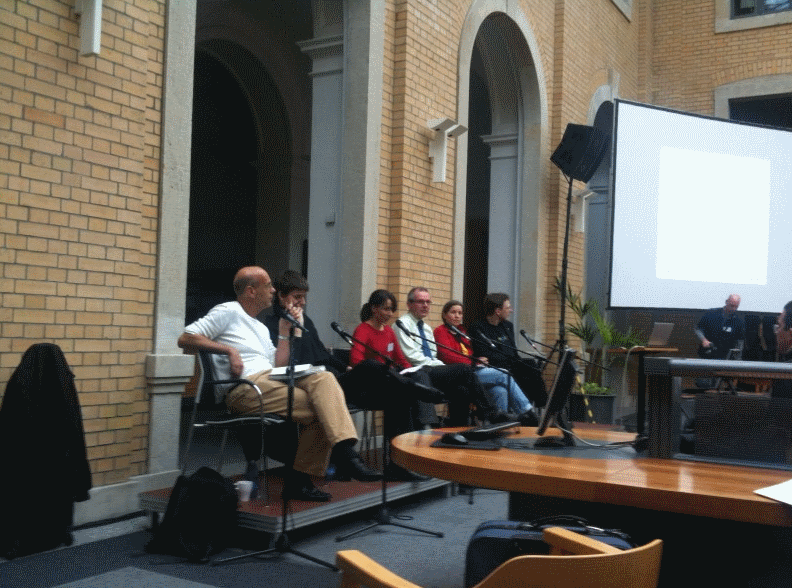
Presented at the Wikipedia Critical Point of View Conference in Leipzig, Germany, Sept. 26, 2010
Die Bibliothek der Zukunft – The Library of the Future
in German and English
At this conference, I was on a panel together with Sabria David. Sabria is an expert in value-oriented business communication and corporate brand development. She is also the co-author of the “Slow Media Manifesto.” Her websites: are
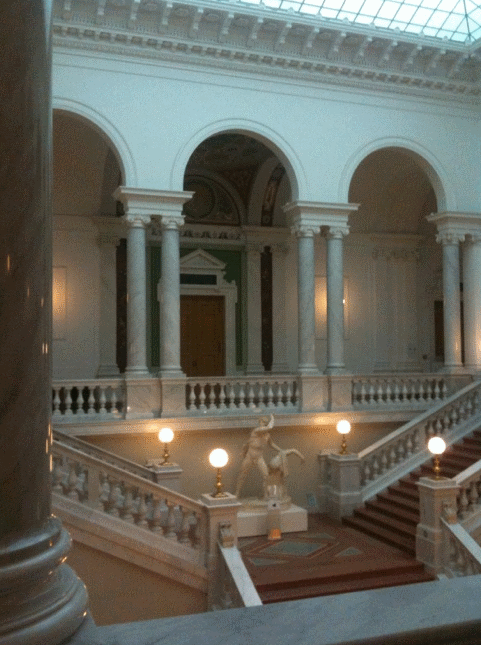
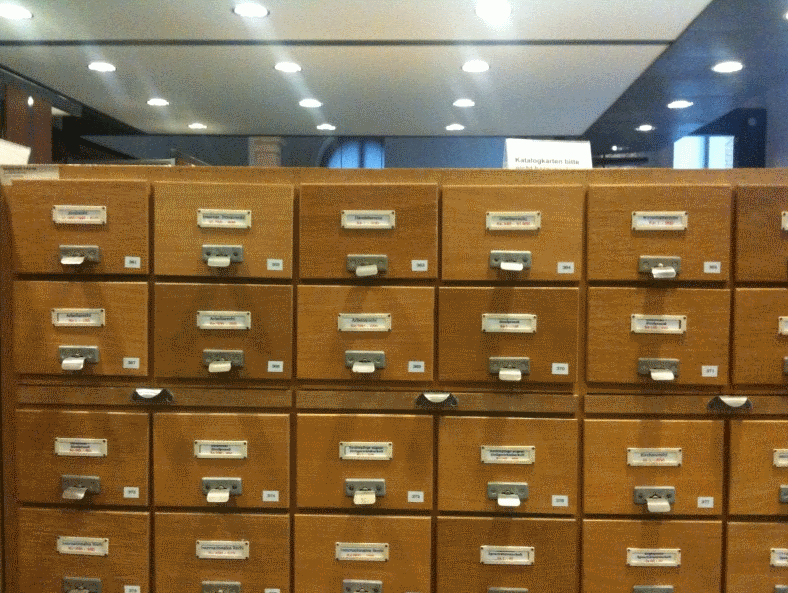
Unser heutiges Konzept von Bibliotheken ist in vielerlei Hinsicht überholt. Ich beziehe mich hier auf Universitätsbibliotheken, öffentliche Bibliotheken und Online-Bibliotheken. Kürzlich untersuchte ich die Internetseiten von etwa hundertfünfzig Universitätsbibliotheken, vor allem in den USA, aber auch in Großbritannien, Australien, Deutschland und anderen europäischen und asiatischen Ländern. Auf meiner Website, www.alan-shapiro.com, verkaufe ich drei Bücher (die ich mit herausgegeben habe): eines über Star Trek, eines über Kunst und Technologie und eines über Tanztheorie und Soziale Choreografie. Ich beschloss, an Universitätsbibliotheken zu schreiben und sie zu bitten, Kopien dieser drei Bücher zu kaufen. Ich war erstaunt zu sehen, dass das User-Interface-Design aller Portale der Universitätsbibliotheken genau gleich ist – als wären sie geklont. Ja, alle 150. Eine fade und einheitliche Landschaft ohne eine einzige Ausnahme. Die angebotenen Bibliothekdienste sind alle mechanistisch, prozedural und funktional. Dies ist das beherrschende Paradigma. Sie können die Ressourcen der jeweiligen Bibliothek nach Stichworten durchsuchen, nach Autor, Titel oder Thema, nach ISBN-Nummer, nach Library of Congress Klassifikationsnummer (in den USA) oder nach Dewey Decimal Systemnummer, das heißt DDC-Sachgruppe (geläufiger in Europa). Sie können ein Buch ausleihen, Ihr ausgeliehenes Buch verlängern, falls kein anderer Benutzer es angefragt hat, oder verlangen, dass die Bibliothek ein Buch über ihre Bezugskanäle bestellt. Sie können einem menschlichen Bibliothekar eine Frage stellen. Diese letzte Funktion ist recht gut. Jedoch zeichnen sich alle diese Dienste durch eine sehr strenge binäre Opposition beziehungsweise einen Dualismus aus: Sie können mit der Software nicht in Interaktion treten oder ein intelligentes Gespräch führen, sondern ausschließlich eine Volltext-Suche oder eine Kategorie-Suche durchführen. Wenn Sie beraten werden wollen, wenn Sie intelligente Konversation wollen, dann müssen Sie mit einem biologisch-basierten Menschen interagieren. Wir sind völlig gefangen in einer mechanistischen Vorstellung davon, was die Benutzeroberfläche eines Bibliotheksystems ist und sein könnte.
In dem Film AI: Künstliche Intelligenz (2001) – produziert von Steven Spielberg –, der auf einer Kurzgeschichte von Brian Aldiss basiert und ursprünglich von Stanley Kubrick entwickelt wurde, wird ein avancierteres Bibliotheks-Interface, als ein imaginäres Wunsch-Medium der Zukunft, durch die virtuelle Figur des Dr. Know dargestellt: einen intelligenten Software-Agenten mit der Stimme von Robin Williams. Der Protagonist des Films David, ein humanoider Roboter-Junge – gespielt von Haley Joel Osment – sucht, im Sinne einer „Quest“, einen Weg, menschlich zu werden. Während seiner spirituellen Reise trifft David die neue Art von Suchmaschine namens Dr. Know in einem dekadenten Rotlichtbezirk einer Zukunftsmetropole im Las Vegas-Stil namens Rouge City. Laut dem Wikipedia-Artikel über AI: Künstliche Intelligenz ist Dr. Know eine „holographic volumetric display answer engine“. Der holographische Dr. Know sieht aus wie eine Mischung aus Albert Einstein und Steven Spielberg. Ein “volumetric display device” ist, nach Wikipedia, a „graphical display device that forms a visual representation of an object in three physical dimensions, as opposed to the planar image of traditional screens that simulate depth through a number of different visual effects“. Diese Definition ist kaum verständlich für den durchschnittlichen Geist eines Universitätsstudenten. Der Engineering-Nerd, der diesen Wikipedia-Beitrag schrieb, macht sich eben sehr gerne lustig über postmoderne Autoren, wegen ihrer angeblichen Verworrenheit und Unverständlichkeit. In unserer Wissenskultur der fordistisch-tayloristischen Spezialisierung wird allgemein akzeptiert, dass ein Ingenieur nicht versucht sich in der Alltagssprache zu erklären. Wenn sich dagegen ein Kulturtheoretiker in seinem Jargon ausdrückt, wird ihm ein sprachliches Vergehen vorgeworfen.
Zurück zu Dr. Know im Wikipedia-Artikel über den Film AI: Künstliche Intelligenz: Wenn Sie auf den Hyperlink „answer engine“ klicken, landen Sie auf einem Wikipedia-Artikel mit dem Titel „Question Answering“. In diesem Computerwissenschaftsartikel wird erklärt, dass eine so genannte „natural language“-answer engine eine Frage, die vom Benutzer in so genannter „natürlicher Sprache“ gestellt wird, „automatisch“ beantwortet. Hier widerspricht sich Wikipedia ziemlich auffällig: Das halb-lebendige Software-Wesen namens Dr. Know ist eine Science-Fiction-Erfindung, die eindeutig auf einem anderen computerwissenschaftlichen Paradigma beruht als dem unseren im Jahr 2010. An dem, was diese Erfindung leistet, ist nichts „automatisch“. Offensichtlich greift Dr. Know nicht auf „entweder eine bereits strukturierte Datenbank oder eine Sammlung von Dokumenten in natürlicher Sprache (ein Textkorpus wie das World Wide Web oder irgendeine kontextspezifische Sammlung)“ zurück, wie der Wikipedia-Artikel die Datenverarbeitung einer answer engine definiert. Die Ideologie und Epistemologie von Wikipedia ist ausschließlich an den so genannten „Fakten“ orientiert. Indem sie „Fakten“ als die einzige Form gültigen Wissens betrachtet, verheddert sich Wikipedia (oder: führt sich Wikipedia selbst ad absurdum), wenn sie mit Science-Fiction zu tun hat. Fakt kann, streng genommen, nur das sein, was in der Vergangenheit passiert ist. Geht es aber nun um ein Ereignis, das in der Zukunft geschehen wird, und kommt dieses Ereignis innerhalb des Mediums der Fiktion zur Sprache, welchen Status kann dann wohl dieses Geschehen haben, hängt man der Wikipedia-Ideologie und Epistemologie der „Nur Fakten“ an? Wikipedia erzeugt hier große Konfusion. Dies ist ein sehr verbreitetes Muster in den Wikpedia-Artikeln über Science Fiction, für das ich zukünftig weitere Beispiele sammeln werde. Die Hyperlinks in den Wikipedia-Artikeln über Science-Fiction-Filme und Erzählungen verweisen auf Wikipedia-Artikel, die gebräuchliche Technologien des Jahres 2010 beschreiben – aufbauend auf unseren derzeitigen wissenschaftlichen Paradigmen. Die Science-Fiction-Filme und Romane selbst beschreiben jedoch keine gängigen Technologien oder Wissenschaften.
Wir leben in einer geistigen Kultur, in der einige Menschen viele Jahre mit dem Studium der Literatur verbringen und versuchen, das komplexe Verhältnis der Fiktion zur Wirklichkeit zu ergründen, andere hingegen – meist Naturwissenschaftler und Ingenieure – begnügen sich für immer mit dem einfachen Gedanken, dass Fiktion das Gegenteil von Wirklichkeit ist: Fiktion ist das Gegenteil von Wirklichkeit. Fiction is the opposite of reality. Fiction is the opposite of reality. That’s it. Diese sechs Worte fassen zusammen, was viele Wissenschaftler und Ingenieure über die Frage von Fiktion und Realität denken. Sie behaupten, dass das Studium der Literatur und der Literaturkritik, der Literaturtheorie und der Literaturwissenschaft nicht existiert. Es ist eine gute Sache, dass unsere verschiedenen Wissensgebiete in derart engem Kontakt stehen. Glaubt man diesen Geeks, ist Fiktion unwirklich, Fake, ein Wolkenkuckucksheim. Man sieht dies andauernd auf Buchumschlägen – vor allem auf naturwissenschaftlichen Büchern, in denen so genannte Science-Facts und so genannte Science-Fiction als Gegensätze postuliert werden. Ich habe diesen Gemeinplatz tausendmal gehört und werde ihn zweifellos noch tausendmal hören.
Was muss sich also ändern, damit die „Bibliothek der Zukunft“ Realität wird?
Der erste von fünf Punkten, auf die ich hinweisen möchte, ist folgender: Dr. Know aus dem Kubrick-Spielberg-Film AI: Künstliche Intelligenz verbildlicht das Traum-Medium der Zukunft – eine qualitativ besseres Interface zu Wissensspeichern wie Bibliotheken als die, die wir jetzt haben. Es bedarf einer neuen Software, eines intelligenten und intuitiven Software-Agenten, der mit dem Benutzer in verbaler Sprache kommuniziert (Ich akzeptiere den Gemeinplatz „natürliche Sprache“ nicht, da dieser Begriff aus einer strengen binäre Opposition zwischen Mensch und Computer entstand, ein Dualismus, den ich, um des Forschritts der Informatik willen, ablehne.), und ihm hilft interessante Quellen zu finden. Man sollte dem Interface jede beliebige Frage stellen können und dieser Software-Assistent oder Wizard hilft aus und regt den Wissensdurst des Benutzers an. Dies wäre ein weiterer Fortschritt auf dem Gebiet der Informatik, das als „Spoken Dialogue Technology“ bekannt ist. Während die Spracherkennung und Sprachsynthese als Teilbereiche der Spoken Dialog Technology heute, in 2010, sehr weit fortgeschritten sind, stecken die Bereiche Language Understanding and Conversational Flow in Schwierigkeiten, wie Professor Michael F. McTear in seinem Buch zu diesem Informatik-Thema sehr gut veranschaulicht. Das Buch ist ja mittlerweile schon ein Klassiker.
Und wenn wir von Klassikern über Wizards sprechen: The Wonderful Wizard of Oz (1900) von L. Frank Baum ist ein sehr wichtiger Text der abendländischen Literatur – viel mehr als nur ein Roman für Kinder, als der er für gewöhnlich angesehen wird. Seine wahre Bedeutung muss erst noch erfasst werden. Die enorme Popularität des Films The Wizard of Oz (Der Zauberer von Oz, Das zauberhafte Land) von 1939, mit Judy Garland in der Hauptrolle, ist in gewisser Weise verantwortlich für die fehlende Interpretation des Buches. The Wonderful Wizard of Oz ist eine Erzählung darüber, warum die Psyche des Cultural-Citizen der modernen westlichen Gesellschaft so verfasst ist, als habe er kein Gehirn (die Vogelscheuche), kein Herz (der Blechmann) und keinen Mut (der feige Löwe), obwohl er insgeheim („immer schon“, um Althussers Begriff zu verwenden) ein Gehirn, ein Herz und Mut hat. Er hat nur noch nicht begriffen, wie er existentiell darauf zugreifen kann.
Die intellektuelle Klasse hat den Massen-Menschen bisher um das Wissen betrogen, dass er bräuchte um zu wachsen. Die Figur des Zauberers von Oz repräsentiert den (Links-)Intellektuellen – die Vogelscheuche, der Zinnmann und der Löwe stehen für das Proletariat. Zurzeit schweigt der Massen-Mensch. Er stellt sich tot. Dies ist eine heimliche Form des Widerstands gegen eine sehr repressive soziale Ordnung, gegen die Simulation der Demokratie – unsere Medienkultur der „pseudo-freien Meinungsäußerung“, die versucht, Menschen zum Sprechen zu zwingen, jedoch in einer Weise, dass dieses Sprechen keine realen Auswirkungen auf irgendetwas hat.
Mein zweiter Punkt, den ich extrem kurz ausführen werde, ist, dass die Library of Congress und die Dewey Decimal Buch-Klassifizierungssysteme grundlegend überarbeitet werden müssen. Warum denke ich das? Weil immer mehr Bücher interdisziplinär sind. Die verschiedenen Kategorien von in Disziplinen angeordnetem Wissen sind nicht mehr wirklich hilfreich. Wir leben in einer Zeit, in der der Anthropozentrismus, der sowohl den Naturwissenschaften als auch den Geisteswissenschaften zugrunde liegt, auseinander bröckelt. Wir sind auf ein neues, kreatives Denken angewiesen, um ein neues System der Klassifizierung des Wissens zu erfinden. Meine gewaltfreie revolutionäre Organisation, mein radikal-liberales Unternehmen namens Shapiro Technologies, wird an diesem Projekt – dem Überdenken der Wissenskategorien – arbeiten. Bibliothekare werden gemeinsam mit uns dieses für die Entwicklung der Menschheit maßgebliche Ziel verfolgen. Um die Daten des Bibliothek-Systems – die Bücher – zu organisieren, brauchen wir neue, flexible Datenstrukturen, die nicht in Standard-Lehrbüchern der Informatik über Datenstrukturen und Entwurfsmuster zu finden sind. Wir brauchen neue, flexible Muster oder „EDV-Mind Maps“, die auf Konzepten der Kybernetik basieren. Richtungsweisend ist hier das Werk von Gregory Bateson, Mind and Nature: A Necessary Unity (1979).
Mein dritter Punkt ist, dass verstanden werden muss, dass die Bücher und andere Quellen der Bibliothek lediglich die Daten des Systems sind, und nicht seine primär strukturierenden Elemente. Das System ist in erster Linie durch seine intelligente Software strukturiert. Diese intelligente Software benötigt als Grundlage eine neue Computerwissenschaft. Die bestehende Computerwissenschaft ist dafür unbrauchbar. Um eine neue Computerwissenschaft zu programmieren, wird Shapiro Technologies eine neue Technik entwickeln, die den Vererbungsmechanismus der Objekt-Orientierung erweitert. Neben Vererbung werden wir Analogien oder Ähnlichkeiten zwischen der Software-Instanz und jenen Software-Klassen haben, die die Möglichkeiten von dem, was die Instanz erbringen kann, bereitstellen.
Die Analogie höchster Ordnung – entsprechend der Definition der Operationsbasis dieses Subsystems – ist die Vorstellung einer Software-Instanz, die eine Wahl (Choice) hat, eine existentielle Freiheit, anstatt durch verfügbare Template-Attribute und -Daten bestimmt zu werden. Choice ermöglicht Unvollständigkeit. Unvollständigkeit ermöglicht Wahl. Basierend auf dem C++ Object Model (siehe die Arbeit von Stanley B. Lippman, der bei AT&T Bell Laboratories und Walt Disney Feature Animation gearbeitet hat), setzen wir einen funktionierenden Objekt-Orientierungs-Vererbungsmechanismus um. Wir erstellen das Framework einer Ähnlichkeits-Technologie, parallel zum Vererbungsmechanismus. Wir schreiben die Java-Klasse für einen Unvollständigkeits-Kanal. Wir programmieren das Möbiusband. Wir programmieren den Operator Aleph.
Mein vierter Punkt ist, dass Wissen lebendig werden muss, sodass der Benutzer tatsächlich Wissen erlebt – im Sinne von Virtual Reality wie in der Holodeck-Technologie bei Star Trek. Virtuelle Holodeck-Realität ist zum ultimativen Ziel für Startup-Unternehmen in der IT-Branche geworden, die Virtual-Reality-Systeme für Anwendungen in der „realen Welt“ entwickeln. In diesen Geschäfts-, Unterhaltungs-, und Militär-Kontexten ist das Holodeck zu einem hyperbolischen industriellen Standard der Perfektion, sowie einem kraftvollen kulturellen Symbol avanciert. Wie Michael Heim – der Autor von The Metaphysics of Virtual Reality (1993) und Virtual Realism (1998) – darlegt, bedeutet das Holodeck aus Star Trek für die aufkeimende VR-Computer-Industrie das, was Star Treks interstellare Raumfahrt im Allgemeinen für die NASA ist: eine Offenbarung (oder schwächer: ein leuchtendes Vorbild). Das Holodeck mit seinem idealen „Human-Machine Interface„ aus sprachaktivierten Befehlen und ultra-realistischen Landschaften, Objekten, Szenen und gehenden und sprechenden Avataren, wird zum Geist, zum Heiligen Gral, der die unternehmerische Forschung zur virtuellen Realität antreibt.
Wir müssen eine Synthese anstreben zwischen den traditionellen Stärken der Buchkultur und dem, was spannend und vielversprechend ist an Multimedia – was im Wesentlichen immer Erlebnis (experience) bedeutet. In anderen Worten: Lernen sollte in die Tiefe gehendes Wissens, das kritisches Denken fördert – wie die Auseinandersetzung mit einem Text beziehungsweise einem Buch – und das Versprechen von Multimedia und neuen Technologien, dass dieses Wissen erlebbar wird, kombinieren. Wir haben großen Respekt vor Büchern, aber wir wollen sie beleben, um die Vitalität des Wissens, die sie enthalten, zu steigern.
Die großartige Star Trek-Episode „All Our Yesterdays“ aus The Original Series zeigt genau diese Synthese zwischen Buchkultur und Erlebnis.
Captain Kirk, Mr. Spock und Dr. McCoy beamen sich hinunter auf den Planeten Sarpeidon, den einzigen natürlichen Satelliten des Sterns Beta Niobe, der in dreieinhalb Stunden als Supernova explodieren wird. Obwohl zuvor bereits festgestellt wurde, dass eine „zivilisierte humanoide Spezies“ auf dem Planeten wohnt, zeigen die Sensor-Scans der Enterprise seltsamerweise an, dass kein intelligentes Leben mehr auf dieser Welt vorhanden ist. „Wie kann ein Planet voller Menschen einfach verschwinden?“, wundert sich McCoy.
Das rätselhafte Verschwinden wird ansatzweise erklärt, als ein älterer Mann mit schütterem Haar erscheint, der ein langes, glänzendes Gewand trägt. Kirk stellt dem ehrwürdigen Herrn die Frage, wohin all die Leute von Sarpeidon gegangen seien. Worauf Herr Atoz (Mr. A bis Z) – gespielt von Ian Wolfe – beiläufig antwortet: „Wohin sie wollten, natürlich. Es hängt allein von der Wahl des Individuums ab.“
Sarpeidons globale politische Führer und leitende Wissenschaftler wussten seit langem von der bevorstehenden Katastrophe – der Supernova. Emsig haben sie einen massenhaften techno-wissenschaftlichen Überlebensplan umgesetzt, unter Einsatz eines beeindruckenden Spektrums an biogenetischen, Multimedia- und Zeitreise-Technologien.
Obwohl sie technologisch sehr fortgeschritten sind, haben die Sarpeids ihre gemeinsamen Anstrengungen nie auf die Entwicklung von Raumfahrttechnologien verwendet. Stattdessen mobilisierten sie ihre gesamten finanziellen und geistigen Ressourcen sowie Neue Medien für den Bau einer riesigen von Technikern verwalteten Bibliothek – ein Supercomputer und ein bemerkenswerter Apparat zum Beugen der Realität. Diese Bibliothek enthält keine Bücher, sondern VERI-SIM-Mini-Disks aus Silber, auf denen die digitalisierten oder virtuellen Inhalte unzähliger Ereignisse aus der Geschichte des Planeten gespeichert und „in jedem Detail erhältlich“ sind. Die dünnen, runden, CD-ähnlichen Platten bieten eine „breite Palette an Alternativen“. Jede der mehr als zwanzigtausend Platten kann ganz einfach mit einem Stativ-Sichtgerät und einem Headset, die sich in einer eigenen Arbeitskabine der Bibliothek oder an einem Schreibtisch befinden, studiert werden.
In den letzten Tagen vor der Supernova-Katastrophe wählte jeder Bewohner von Sarpeidon seinen bevorzugten Ort zu einem bestimmten historischen Zeitpunkt aus den riesigen Archiven der Bibliothek. Dann ließ er einen System-Administrator eine Software-Routine für das Lesegerät bearbeiten, um das gegenwärtig im Viewer platzierte Medium auszuführen. Captain Kirk lächelt, als er in seinem Viewer auf einer Minidisk-Simulation Menschen erblickt, die in Pferdekutschen auf einer gepflasterten Straße fahren. Es ist eine Szene aus dem späten siebzehnten Jahrhundert in England. Kirk hört plötzlich eine Frau um Hilfe schreien. Er betritt das Zeitreise-Portal und wird ein romaneskes Abenteuer erleben.
Das Geniale und Wichtige an Star Trek ist, dass diese Serie Geschichte und Literatur mit den neuen Medien und neuen Technologien zusammen denkt. Dies ist genau das, was getan werden muss, und in der Tat ist es nach dem Kantschen kategorische Imperativ ziemlich naheliegend dies zu tun. Es ist das einzig Logische, wie Spock sagen würde. Falls man in der Lage ist zu denken, was wir jetzt – wie Heidegger prophezeit hat – tun müssen. Als verantwortungsbewusste und zivilisierte Menschen wollen wir die Errungenschaften der Menschheit aus früheren Epochen respektieren. Und wir wollen ebenfalls die technologischen Leistungen von heute respektieren, auch wenn sie zurzeit mit wenig Bewusstsein angewandt werden.
Ich werde mit der Erwähnung eines fünften und letzten Punktes abschließen. Er betrifft das Verhältnis zwischen Bibliotheken und Wikipedia. Bibliotheken brauchen keine Wikipedia. Aber Bibliotheken brauchen so etwas wie Wikipedia, einen verbesserten Nachfolger von Wikipedia. Tendenziell hält Wikipedia Studenten davon ab selbst weiter zu forschen (oder: zu recherchieren). Der Nachfolger von Wikipedia sollte so gestaltet sein, dass er Studenten ermutigt tiefer in ein Thema einzusteigen. Das kritische Nachdenken über Wikipedia steht im Mittelpunkt dieses Kongresses. Wie ich bereits in Amsterdam gesagt habe, bin ich Wikipedia gegenüber nicht so kritisch wie die meisten anderen Redner, zumindest jene, die ich dort gehört habe. Ich bin der Meinung, dass Kritik oder kritische Theorie ein wichtiger Bestandteil einer größeren Perspektive sein sollte, und diese größere Perspektive sollte konstruktiv sein. Als Software-Unternehmer bin ich eine Mischung aus einem Französisch-deutsch-dekonstruktivistischen Marxist und einem US-amerikanischen optimistischen Pragmatist. Ich bin solidarisch mit Richard Rorty, der gesagt hat, dass wir Radikalismus und Liberalismus kombinieren müssen, ohne das eine oder das andere zu verwässern.
Comments
One response to “Die Bibliothek der Zukunft – The Library of the Future, von/by Alan N. Shapiro”
This is very interesting, You’re a very skilled blogger. I have joined your feed and look forward to seeking more of your great post. Also, I’vе
shared your site іn my social netwοгκs!