Alan N. Shapiro, Hypermodernism, Hyperreality, Posthumanism
Blog and project archive about media theory, science fiction theory, and creative coding
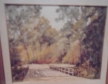
Impressionist Paintings by Florence Morrison, Installment 2
May 25th, 2011 in the categories: Painting
Walk to Elysium (1963), Protected Walkway (1968), Connecting Fences (1960)
From Las Vegas (NV) to the Cactus League (AZ)
May 20th, 2011 in the categories: New American Studies, Photography
Leaving Las Vegas... Driving through the northern Arizona desert... To the Cactus League... In the Shadow of Jean Baudrillard and America... To arrive at nighttime March baseball in southern Arizona!

New York New York Las Vegas Casino & Hotel

Three Impressionist Paintings by Florence Morrison
April 1st, 2011 in the categories: Painting
The singularity of this (the second of three) painting(s) is striking, yet it also reminds me of work products from Van Gogh's period in Arles.

Most tourists - for example, American tourists - go to Venice and Florence. Between those two fascinating cities lies the undiscovered gem which few tourists visit: Bologna.
From The Technological Herbarium, by Gianna Maria Gatti – Interactive Plant Growing and Trans Plant by Christa Sommerer and Laurent Mignonneau (translated by Alan N. Shapiro)
October 4th, 2010 in the categories: Arts & Genomics, The Illusion Beyond Art, The Technological Herbarium
Botany forms the basis of Christa Sommerer's training: she dedicated herself to it after her secondary studies, at the Faculty of Biology and Botany of Vienna. Her intention was to investigate nature applying and elaborating methods suitable to the classification of plants. to achieve the formulation of systematic rules.
From The Technological Herbarium, by Gianna Maria Gatti – Nerve Garden by Bruce Damer (translated by Alan N. Shapiro)
October 4th, 2010 in the categories: Real/Virtual Reality, The Illusion Beyond Art, The Technological Herbarium
Nerve Garden is a three-dimensional virtual world accessible on the Internet, a "Public Terrarium in Cyberspace," according to the definition of its authors, where the users of the Net can sow and witness the growth of virtual plants.
Only Impossible Exchange Is Possible, by Aurel Schmidt (translated by Alan N. Shapiro)
April 15th, 2010 in the categories: Jean Baudrillard, Zen Buddhism
Impossible exchange is an impossible subject. In Jean Baudrillard's book "Impossible Exchange", the matter is treated in such a way that one is better off with an associative and meditative interpretive approach than with a discursive reading.
Considerations on Transgenic and Biotech Art, by Gianna Maria Gatti (translated by Alan N. Shapiro)
April 15th, 2010 in the categories: Arts & Genomics, The Illusion Beyond Art, The Technological Herbarium
At the Experimental Art Foundation of Adelaide, Australia, there took place in 2004 the exhibition "Art of the Biotech Era" organized by Melentie Pandilovski. It involved the principal exponents of the artistic sphere connected to biology, genetics and bio-technologies, showing their projects and realizations.
From The Technological Herbarium, by Gianna Maria Gatti – Osmose by Char Davies (translated by Alan N. Shapiro)
April 15th, 2010 in the categories: Real/Virtual Reality, The Illusion Beyond Art, The Technological Herbarium
To enter inside a tree and exit it through the leaves after having participated in its process of chlorophyllous photosynthesis: this is one of the many journeys that Char Davies makes the user of "Osmose" experience in an immersive, interactive, and multisensorial VR environment that was developed and produced in 1995.
From The Technological Herbarium, by Gianna Maria Gatti – Telegarden by Ken Goldberg (translated by Alan N. Shapiro)
April 15th, 2010 in the categories: The Illusion Beyond Art, The Technological Herbarium
Telegarden is a telerobotic installation that enables users of the World Wide Web to see and cultivate a real garden. Conceived in 1994, it was activated in June 1995 at the University of Southern California and presented at the leading international exhibitions of digital art and technology.
Merleau-Ponty and Marx on Nature and Art, by Gianna Maria Gatti (translated by Alan N. Shapiro)
April 15th, 2010 in the categories: Arts & Genomics, Karl Marx, Maurice Merleau-Ponty, The Illusion Beyond Art, The Technological Herbarium
Interrogating Western philosophy, Maurice Merleau-Ponty pinpoints the original meaning of the concept of Nature. "In Greek, the word 'nature' comes from the verb φύω, which alludes to the vegetative; the Latin word comes from nascor, 'to be born', 'to live'; it is drawn from the first, more fundamental meaning."
The Technological Herbarium: Introduction, by Gianna Maria Gatti (translated by Alan N. Shapiro)
April 15th, 2010 in the categories: Arts & Genomics, The Illusion Beyond Art, The Technological Herbarium
Infinite are the facets in which the living manifests itself. Infinite are the possibilities in which it expresses its existence. Art seizes these possibilities of existence, interprets them, advances unusual combinations of them, breaks up their consolidated connections.
Gianna Maria Gatti’s The Technological Herbarium, by Alan N. Shapiro
April 14th, 2010 in the categories: Arts & Genomics, The Illusion Beyond Art, The Technological Herbarium
The hybrid of art and technoscience is the carrier of a new worldview, a new era for cyberspace, new cognitive thought and cybernetic epistemology, and the emergence of authentic post-metaphysical thinking as pointed to by 20th century philosophers like Heidegger, Derrida, Merleau-Ponty and Bateson.
-
You are currently browsing the archives for the The Illusion Beyond Art category.
- Additive Manufacturing (1)
- Architecture (1)
- Art and Economics (4)
- Artificial Intelligence (3)
- Black Mirror (1)
- Book Descriptions (2)
- Computer Science 2.0 (11)
- Consumer Culture (1)
- Creative Coding (2)
- Donald Trump (5)
- European Union (1)
- Feminist Theory (1)
- Folkwang Heterotopia Masters Students: Architecture (9)
- Folkwang Heterotopia Masters Students: Media Theory (25)
- Folkwang Heterotopia Masters Students: Philosophy (17)
- Future Design (31)
- Gerry Coulter (1)
- History (1)
- Humanities Informatics (10)
- Alexis Clancy (5)
- Mathematics (2)
- Hypermodernism (1)
- Las Vegas (1)
- Lost (5)
- Media in the Digital Society (1)
- Media Studies (1)
- New American Studies (15)
- American Football (2)
- American Slang (1)
- Baseball (3)
- Casino Gambling (3)
- Sports Gambling (2)
- Offenbach Students: Artificial Intelligence Projects (1)
- Offenbach Students: Creative Coding Projects (3)
- Offenbach Students: Generative Art Projects (1)
- Offenbach Students: HTML & JavaScript Projects (3)
- Offenbach Students: Hypertext Projects (1)
- Offenbach Students: Wordpress Projects (2)
- Philosophy of Science (1)
- Political Philosophy of Democracy (1)
- Post-Capitalism (1)
- Presidential Politics (1)
- Public Space Art (1)
- Quantum Culture (6)
- Quantum Physics Sociology (10)
- Consumer Culture (2)
- Information Society (4)
- War & Peace (3)
- Wikipedia (1)
- Science & Technology (31)
- Androids & Artificial Life (4)
- Real/Virtual Reality (5)
- Rethinking Science (18)
- Arts & Genomics (10)
- The Technological Herbarium (14)
- Teleportation (2)
- Time Travel (3)
- Science and the Humanities (1)
- Science Fiction Film (1)
- Self and Identity (1)
- Seminars (1)
- Situationists (1)
- Sociology (1)
- Software Studies (3)
- Space Travel (1)
- Star Trek (17)
- Android Data (1)
- Captain Kirk (1)
- Captain Pike (1)
- The Next Generation (1)
- Stories, Language & Media (36)
- Fiction (8)
- Creative Writing (3)
- English Literature (2)
- German Literature (1)
- Irish Literature (1)
- Language (5)
- Media Studies (21)
- Horror (1)
- Science Fiction Studies (6)
- Social Media (1)
- Music (2)
- Fiction (8)
- Surveillance (1)
- The Body (3)
- Dance Theory (1)
- Polysexuality (2)
- The Illusion Beyond Art (29)
- Painting (4)
- Performance Studies (2)
- Philosophy of Love (1)
- Photography (4)
- Zen Buddhism (1)
- The Prisoner (3)
- Thinkers (42)
- A. N. Whitehead (1)
- Adolf Portmann (1)
- Chaim Perelman (1)
- Claude Lefort (1)
- Donna Haraway (1)
- Friedrich Nietzsche (1)
- Georges Bataille (1)
- Gottfried Wilhelm Leibniz (1)
- Gregory Bateson (1)
- Hans-Peter Dürr (1)
- Jacques Derrida (4)
- Jacques Lacan (1)
- Jean Baudrillard (22)
- Jean-Paul Sartre (1)
- Karl Marx (2)
- Ludwig Wittgenstein (1)
- Marshall McLuhan (1)
- Martin Heidegger (3)
- Maurice Merleau-Ponty (2)
- Michel Foucault (1)
- P.D. Ouspensky (2)
- Paul Virilio (3)
- Richard Rorty (1)
- Roland Barthes (1)
- Rosalind Krauss (1)
- Sherry Turkle (1)
- Sigmund Freud (2)
- Slavoj Žižek (1)
- Walter Benjamin (1)
- Uncategorized (3)
- Utopian Studies (1)
Pages
Categories
| M | T | W | T | F | S | S |
|---|---|---|---|---|---|---|
| « Mar | ||||||
| 1 | 2 | 3 | 4 | 5 | 6 | 7 |
| 8 | 9 | 10 | 11 | 12 | 13 | 14 |
| 15 | 16 | 17 | 18 | 19 | 20 | 21 |
| 22 | 23 | 24 | 25 | 26 | 27 | 28 |
| 29 | 30 | 31 | ||||
Archives
© 2024 Alan N. Shapiro, Hypermodernism, Hyperreality, Posthumanism
proSlate Theme by Pro WP Themes